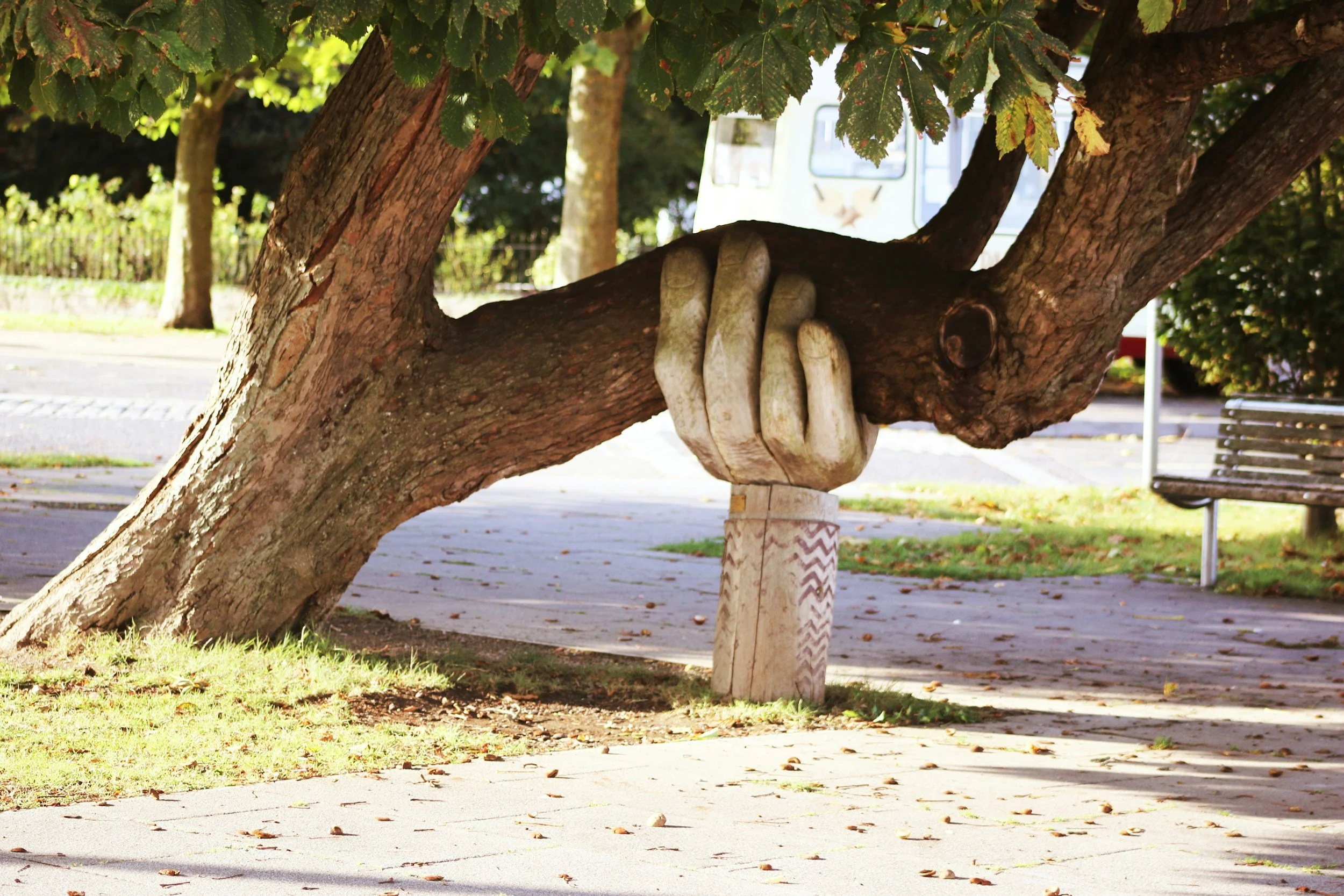
Lean on me
What the research tells us about music performance anxiety — and where the gaps remain
Tagged: 🎓 For Researchers | 🎵 For Teachers | 💛 For Parents
This series draws on peer-reviewed research in music psychology and music education. References and further reading are listed at the foot of each post. Where findings from my own doctoral research are shared, this will be clearly indicated.
Picture, for a moment, all the young singers who have ever stood in the wings of a stage and felt their heart hammer against their ribs.
Now picture, beside them, all the researchers who have spent careers trying to understand what was happening inside those bodies and minds — and what helps.
This post is a thank you to those researchers. Everything I’ll share with you across the rest of this series — the practical ideas, the things to try, the things to gently stop doing — rests on the work they have built over decades. When we know what to say to a young singer in the green room, when we know how to design a lesson that supports rather than scares, when we can tell which stories about music performance anxiety are unhelpful and which are true, we are leaning into their work. That’s where this post’s title comes from. They are who we lean on.
In this blog post, we’ll explore:
What the research teaches us about music performance anxiety — what it actually is, who experiences it, and how it shows up in young singers especially.
Researchers’ approaches to support musicians with MPA
Opportunities to contribute to MPA research - that’s where my own doctoral work has tried, in a small way, to add to the conversation.
So, what really is music performance anxiety?
If you’ve ever felt your stomach turn upside down before a wedding speech, a job interview, or a parent–teacher meeting, you already know something true about MPA. Most of us do. The difference for musicians is that the moment of exposure is the work itself.
Psychologist Dianna Kenny sums this up beautifully:
Music performance anxiety is the experience of marked and persistent anxious apprehensionrelated to musical performance that has arisen through underlying biological and/or psychological vulnerabilities and/or specific anxiety-conditioning experiences.
Two ideas from literature on anxiety are explored here:
The first comes from an American psychologist called Charles Spielberger, who differentiated between state anxiety — the wobble you feel in a particular moment — and trait anxiety — a steadier, more dispositional tendency to feel anxious across many situations. The two can stand alone or work together. A child who runs higher on trait anxiety may tend to feel more state anxiety in performance moments. And, importantly, repeated unsupported state experiences can, over time, settle into a more anxious trait. What happens in the weeks and moments leading up to early performances is not trivial. It is formative.
The second idea is more hopeful. Not all of the racing-heart, hot-cheeks, fluttery-belly feelings before a performance are bad. Sport psychologist Yuri Hanin proposed that every performer has a personal zone of activation within which they perform best. Too little energy and we’re flat. Too much and we’re overwhelmed. But there’s a band in the middle that’s just right. The British researcher Andrew Steptoe and others have applied this thinking to musicians, distinguishing facilitative anxiety (the kind that sharpens you) from debilitative anxiety (the kind that derails you). The aim isn’t to get rid of nerves. It’s to help young singers find — and trust — their zone.
So when a young singer stands in the wings with a racing heart, that does not, in itself, mean something is wrong. It might mean their body is telling them that something they care about is about to happen. Whether they read the racing heart as a sign that I’m in danger or that I’m ready is worthy of deeper understanding from us as parents, educators and researchers.
Leaders in the field: Researchers we lean on
It’s worth pausing here to name and acknowledge some of the incredible people whose generous and important work has built what we now know.
Dianna Kenny’s pivotal 2011 book on the psychology of music performance anxiety remains the most comprehensive single resource we have, and her biopsychosocial model — the idea that MPA arises from the interaction of biology, psychology, and social context — has shaped how researchers think about it ever since. Her more recent work goes further still: she now argues that the very origins of performance anxiety sit in our earliest relationships — the quality of early attachment, the conditions under which approval was given or withheld in childhood, the temperaments we are born with. That is a significant claim from one of the field’s most authoritative voices. It says, in effect, that performance anxiety is shaped, from the very beginning, by relationship.
Margaret Osborne has spent her career exploring what MPA looks like specifically for young musicians. She co-developed the questionnaire used worldwide to measure MPA in adolescents. And her work on sensitising experiences showed something unsettling: early performances that go badly and are not supported afterwards can entrench anxiety rather than normalise it. The familiar advice to “just get them more performances under their belt” only works when the right kind of support is wrapped around the experience. Osborne has also been one of the field’s steadiest advocates for psychoeducation — the idea that simply teaching young musicians what MPA is and why their bodies do what they do is itself meaningfully helpful. That’s a big part of why this series exists.
MPA is multidimensional – it has shape. Glenn Wilson pointed out that performance anxiety shows up in three places at once — in our heads (the worried thoughts), in our bodies (racing heart, shaking hands), and in our actions (avoiding, rushing, freezing). You can work on any one of those places, and each one matters. Andrew Steptoe added a second insight: MPA is not a single moment. It has before, during, and after. The days leading up to a performance need different support from the performance itself, which in turn needs different support from the hours and days afterwards. If you’ve ever wondered why a child seems fine at the lesson, falls apart on the morning of the concert, and is quiet on the drive home, you’re seeing all three phases at work.
Ioulia Papageorgi, Susan Hallam, and Graham Welch gave us a way of understanding why two children of similar ability can have such different experiences of performance. The difference, much of the time, lies in self-efficacy — a more technical way of saying I believe I can do this. Their work drew on the foundational thinking of Albert Bandura, who showed that self-belief is built (or eroded) by four things: doing the thing and succeeding, watching others like us do it, being encouraged, and what our body and mind tell us about the experience. Those four ingredients are the architecture of confidence — and providing support at home, in the classroom, and in the studio is integral to creating safe environments for performance and learning.
And then there are the researchers who have done the careful, patient work of paying close attention to young children specifically. Charlene Ryan, Helene Boucher and her colleagues, and more recently the team of Catherine Tardif, Helene Boucher, Janelle Lane, and Andrea-Kati Barbeau have worked with children as young as preschool age. Boucher and Ryan measured stress hormones in three- and four-year-olds and found them present. Let’s sit with that for a minute – aged three and four. Ryan’s work in elementary schools confirmed that meaningful pre-performance anxiety is reported by children long before adolescence. And Tardif and colleagues’ 2024 study of children aged nine to twelve found that MPA in this age group goes hand-in-hand with social anxiety — peers are right at the heart of it.
There are so many more talented researchers whose contributions are important and significant, not named in this post. Everything I’m about to share with you exists because of these people. Our understanding of MPA — what it is, who experiences it, how it develops, what it does — is theirs. We lean on them. And we thank them.
Why is this important for young singers?
If we hold this body of work together and ask what it tells us specifically about pre-adolescent voice students — the seven-to-twelve-year-old singers at the heart of my doctoral research — five things stand out.
One. It’s real, it’s measurable, and it’s not rare. From cortisol evidence in preschoolers to elementary school surveys to studies of children ages 9 to 12, the picture is consistent. By the time most children are in voice lessons or choirs, a meaningful proportion are experiencing anxiety symptoms that affect how they sing — and, sometimes, whether they keep singing at all.
Two. It looks similar across the ages. The shaking hands, the butterflies, the racing heart, the shallow breathing — these are not adult symptoms that children grow into. Dianna Kenny’s recent work confirms that childhood MPA is, in its physical signature, recognisably the same condition adults experience. We are not waiting for it to develop. It is already here.
Three. It tends to stick. This is the one I most want parents and teachers to hear. MPA, once established, is reasonably stable across the lifespan. An anxious young performer is meaningfully more likely to become an anxious older performer if their anxiety isn’t met with the right kind of support. As Kenny herself puts it, the persistence of MPA across childhood and into adulthood means that early support is not optional. It is essential.
Four. The peer dimension is enormous at this age. Tardif and colleagues found MPA and social anxiety bound together in nine- to twelve-year-olds. Developmental neuroscience explains why. The brain researcher Nim Tottenham has mapped the way the amygdala (the brain’s alarm system) and the prefrontal cortex (the part that does the appraising) develop and connect during this exact window. Pre-adolescents are not just more aware of their peers than younger children. They are neurologically wired to weigh peer perceptions more heavily than at any earlier point in their lives. Whatever performance anxiety is for an eight-to twelve-year-old, it is happening in the context of what other kids might think of me.
Five. For singers, the instrument is the body. This is the bit that makes young voice students a particular case. As voice researchers like Janice Chapman and Leon Thurman with Graham Welch have written extensively, the voice doesn’t sit in a case to be picked up. It lives inside us. A violinist with shaking hands can still produce a recognisable sound on the violin. A young singer whose body is in full anxiety response is producing their instrument and their anxiety simultaneously, from the same physical place. The tight throat is the instrument. The shallow breath is the support. Anything we do to help a young singer with MPA is also, by definition, doing something to help them with their relationship with their own body.
What has been tried — and what works
The body of research on how to help musicians with MPA is one of the field’s real achievements. A young musician seeking support today has access to better evidence and more options than at any previous point in history. Most of what has been tried falls into one of a handful of approaches.
Changing the thoughts: cognitive-behavioural therapy
The most established approach is cognitive-behavioural therapy, or CBT. CBT works by helping a person notice the unhelpful thought patterns that ride along with anxiety — the catastrophising (everyone will know I forgot the words), the negative comparing (everyone else has it together), the predicting (I’m going to mess this up) — and gently practising more accurate, more useful ways of thinking. Decades of research support CBT-based work with musicians. Many of the techniques sports psychologists and performance coaches use today trace back to this tradition, even when they’re not labelled as CBT.
Making peace with the nerves: Acceptance and Commitment Therapy
More recently, clinical psychologist David Juncos has led a pivotal body of work making Acceptance and Commitment Therapy (ACT) accessible to music teachers and their students through coaching. ACT does something subtly different from CBT. Instead of trying to change the unhelpful thoughts, it invites the performer to develop a new relationship with their anxiety: to let it be there, name it, even welcome it as part of caring about the performance, and to keep going anyway. This is both powerful AND empowering.
What I find compelling about the ACT story is how it has moved. Juncos and his colleague Dana Markman first tested it in the clinic with university student singers. From there, researchers Anna-Liisa Shaw, Niamh Mahony, and Jane Paul, working with their collaborators, have shown that singing teachers — not psychologists — can be trained in a few short sessions to deliver acceptance-based coaching to their own students. Paul and colleagues took the work to adolescent singers, who learned to sing alongside their anxiety rather than waiting for it to disappear. That shift — from I have to feel calm to perform to I can feel scared and sing anyway — is one of the most important reframes in the literature. We’ll come back to it.
Tuning into the moment: mindfulness
Mindfulness-based approaches share ACT’s emphasis on present-moment awareness — noticing what is, without scrambling to fix it. The evidence base in music is younger than that in CBT, but it is steadily growing.
Working with the body: physiological approaches
Some approaches target the body directly. For adult professional musicians, beta-blockers — medications that quiet the physical symptoms of anxiety — are well established and reasonably well evidenced for short-term use. They are not for children. The non-medication options — controlled breathing, progressive muscle relaxation, biofeedback — are gentler, transferable to younger musicians, and grounded in the same physiological reality: that the body’s anxiety response can be calmed by intentional, practised action.
Using performance itself: exposure approaches
Some interventions use the performance situation itself as the medicine. Mock performances, gradual stage exposure, structured experiences that build from low-stakes to higher-stakes — the logic is intuitive, and the research broadly supports it. But — and this is a big but — Osborne and Kenny’s work on sensitising experiences is the cautionary tale here. Exposure on its own is not enough. The conditions in which the exposure happens — the support around the performer, the meaning they attach to the experience, the response of the people who witness them — determine whether a performance becomes a step forward or a setback. There is no virtue in simply throwing them in without the scaffolding around them.
Teaching them about it: psychoeducation
And finally, the approach most relevant to what you’re reading right now: teaching young musicians about MPA itself. Margaret Osborne’s research has shown that even brief psychoeducational interventions — explaining what’s happening in the body, why nerves do what they do, what’s normal — can produce meaningful improvements in young musicians’ confidence and reductions in their anxiety. Knowledge itself is a form of support. Naming a thing tames it. That principle is part of why this blog exists.
A newer idea: the importance of the environment
For most of its history, MPA research has shared a hidden assumption. The assumption is that performance anxiety lives inside the performer, and therefore that interventions need to change something inside the performer.
That assumption is starting to be questioned from inside the field itself. Researchers Andrea Herman and Eric Clarke argue, in a paper whose title says everything you need to know: It’s not a virus! Reconceptualizing and de-pathologizing music performance anxiety so it is better understood as a normal, adaptive response to the conditions of performance environments than as an illness sitting inside the musician.
The implication is huge. If MPA is partly a response to the room — to the way a lesson is structured, the way feedback is given, the way mistakes are received, the way an audience watches — then the room itself becomes part of the conversation. It poses questions for us to explore. The question is no longer what is wrong with this performer, but what situation are we putting them in? Not how do we fix the child, but how do we change the conditions, so the anxiety is proportionate to the situation rather than amplified by it?
Catherine Aubry and Mats Küssner, in a 2025 review of the field, made a complementary point. The MPA literature, they noted, has documented predisposing vulnerabilities — the things that make a person more susceptible to MPA — in great detail. But it has been much quieter on protective factors — the conditions and circumstances that buffer against MPA in the first place, or help it recede once it’s there. Finding those protective factors, they argued, is one of the most important outstanding tasks for the field.
That call is one my doctoral research has tried, in its small way, to answer.
What all of this shares — and what it leaves out
Each of the approaches above has genuine merit. Taken together, they represent a serious, ongoing commitment to understanding and helping with a real difficulty in musicians’ lives.
But notice something they share.
Almost without exception, they are designed and delivered one musician at a time. The anxious performer is identified, assessed, and offered support — cognitive, physiological, acceptance-based, educational — aimed at changing something within them. Even when interventions are delivered to a group of musicians at once, the group tends to function as a delivery setting — a more efficient way to reach more people — rather than as the mechanism through which change occurs. The work is happening, theoretically and practically, one performer at a time.
There is one quiet exception. ACT’s focus on values — on what genuinely matters to the performer, and what they want to do regardless of how anxiety makes them feel — has an implicit relational dimension. When a young singer says I sing because I love sharing music with my friends, or singing with my choir is where I feel most myself, the community and connection they’re describing become part of the intervention itself. That’s a thread worth pulling.
The broader individual focus of MPA research isn’t surprising. It mirrors the wider individualism of Western psychology. And it matches the way we typically picture performance itself — as a solo act, a moment of individual exposure, a test of personal capability and resilience.
But it leaves a particular question relatively unexplored.
Where my research comes in
What if some of the conditions that protect young singers against performance anxiety aren’t inside the individual child at all?
What if they’re between people — in the quality of the relationships within a learning environment, in the meanings a group of young singers build together about what performance is for, in the strategies that travel from one young singer to another in language only peers can use?
A handful of specific quiet places in the existing research sit underneath that question.
The first is the relative absence of pre-adolescent voice students from the research record. Most of what we know about MPA comes from studies of adult professional musicians, conservatoire students, or older adolescents. The pre-adolescent window — roughly ages eight to twelve, the exact developmental moment when peers become neurologically magnetic — remains one of the most under-researched stages of MPA development.
The second is the relative absence of the group voice class as a research setting. Where MPA in young musicians has been studied, it has more often been in private lessons, established ensembles, or one-off performances. The group voice class — a setting many children experience, in which young singers come together specifically to learn to sing alongside one another — is largely unexamined as a site where MPA develops, persists, or transforms.
The third is the assumption that coping strategies are something experts deliver to students. The teacher, the clinician, the coach is the source; the student is the recipient. What if, in fact, some of the most powerful coping strategies in a group of pre-adolescent singers are generated and circulated by the children themselves — and what if the strategies most likely to be taken up are the ones that arrive in peer-language rather than adult-language? That possibility is largely missing from the existing literature.
The fourth is something Albert Bandura himself wrote about — collective efficacy — but which has stayed quietly in the background of MPA research. We know a lot about self-efficacy: I believe I can do this. We know much less about its plural cousin: we believe we can do this. Does we’ve got this operate differently from I’ve got this in the body of a ten-year-old standing in the wings? My hunch — built from years in the studio and now supported by my data — is that it might.
The fifth is the thing the existing literature documents but cannot quite resolve. Researchers call it the peer paradox. Peers, at this age, are simultaneously the most powerful source of evaluative threat a young singer faces and potentially the most powerful source of support available to them. The question isn’t whether peers are threatening or supportive. It’s under what conditions, through what mechanisms, and over what timeline they become the latter rather than the former.
Taken together, these five quiet places point in one direction. They suggest there is something worth looking at carefully: what happens, over time, in a group of pre-adolescent voice students learning together — and whether the relationships in that group can be deliberately built into a resource against the very anxiety those same relationships would, in a less considered setting, only intensify.
Where this series goes next
That’s the question my doctoral research set out to investigate. Could the relational architecture of a group voice class — the way it is set up, the way it is held, the way the children are encouraged to belong — transform their experience of music performance anxiety? And what specifically could a community of young singers build for itself that no single expert intervention, however brilliantly designed, ever could?
To investigate that, I drew on the work of the Irish music education scholar Ailbhe Kenny — no relation, despite the surname, to the Dianna Kenny we met earlier. Her framework of Communities of Musical Practice offers a way of thinking about how groups of musicians come to function as genuine learning communities. I’ll return to her framework in detail later in the series.
Next week’s post (Post 7) explains how the research was actually carried out — who was involved, what methods were used, and why a study of young singers had to be designed quite differently from a study of adult musicians. And in the post that follows (Post 8), we’ll spend time with the eight remarkable young singers who became my research’s true experts — the children with whom I got to make music over eight joyful weeks.
For now, hold this. There is a remarkable body of research on MPA, built carefully and patiently by committed scholars over decades. Their contributions are generous and generative. The research keeps moving — researchers and educators are increasingly collaborating, listening to each other, and learning together how to create safer spaces where people can enjoy making music as their authentic selves. In the posts ahead, I gently and purposefully add my voice to that important conversation.
When we do things together, when we listen to each other, when we treat each other with kindness, compassion, and curiosity, we achieve wonderful things.
Thank you for joining me on this journey.
The title of this post comes from the song Lean on Me by Bill Withers
Part of the Little Voices, Big Feelings series — an evidence-informed exploration of music performance anxiety in child singers, written for parents, teachers, and music educators. Published weekly.
Never miss a post — new writing from the Little Voices, Big Feelings series delivered to your inbox every week.
References
Aubry, C., & Küssner, M. B. (2025). Multidimensional causes of music performance anxiety: A review of contemporary research. Psychology of Music. Advance online publication.
Bandura, A. (1997). Self-efficacy: The exercise of control. W. H. Freeman.
Boucher, H., & Ryan, C. A. (2011). Performance stress and the very young musician. Journal of Research in Music Education, 58(4), 329–345.
Hanin, Y. L. (2000). Individual zones of optimal functioning (IZOF) model: Emotion–performance relationships in sport. In Y. L. Hanin (Ed.), Emotions in sport (pp. 65–89). Human Kinetics.
Herman, A., & Clarke, E. F. (2023). It’s not a virus: Reconceptualising and de-pathologising music performance anxiety. Frontiers in Psychology, 14, 1194873.
Juncos, D. G., & Markman, E. J. (2016). Acceptance and Commitment Therapy for the treatment of music performance anxiety: A single subject design with a university student. Psychology of Music, 44(5), 935–952.
Juncos, D. G., Heinrichs, G. A., Towle, P., Duffy, K., Grand, S. M., Morgan, M. C., Smith, J. D., & Kalkus, E. (2017). Acceptance and Commitment Therapy for the treatment of music performance anxiety: A pilot study with student vocalists. Frontiers in Psychology, 8, 986.
Juncos, D. G., & de Paiva e Pona, E. (2022). Acceptance and Commitment Coaching for music performance anxiety: A practitioner’s guide to using ACC. Equinox Publishing.
Kenny, D. T. (2011). The psychology of music performance anxiety. Oxford University Press.
Mahony, S. E., Juncos, D. G., & Winter, D. (2022). Acceptance and commitment coaching for music performance anxiety: Piloting a 6-week group course with undergraduate dance and musical theatre students. Frontiers in Psychology, 13, 830230.
Osborne, M. S., Kenny, D. T., & Holsomback, R. (2005). Assessment of music performance anxiety in late childhood: A validation study of the Music Performance Anxiety Inventory for Adolescents (MPAI-A). International Journal of Stress Management, 12(4), 312–330.
Osborne, M. S., & Kenny, D. T. (2008). The role of sensitising experiences in music performance anxiety in adolescent musicians. Psychology of Music, 36(4), 447–462.
Papageorgi, I., Hallam, S., & Welch, G. F. (2007). A conceptual framework for understanding musical performance anxiety. Research Studies in Music Education, 28(1), 83–107.
Paul, J., Shaw, T. A., & Juncos, D. G. (2024). Acceptance and Commitment Coaching for adolescent singers with music performance anxiety. Frontiers in Psychology, 15, 1367704.
Ryan, C. (2005). Experience of musical performance anxiety in elementary school children. International Journal of Stress Management, 12(4), 331–342.
Shaw, T. A., Juncos, D. G., & Winter, D. (2020). Piloting a new model for treating music performance anxiety: Training a singing teacher to use Acceptance and Commitment Coaching with a student. Frontiers in Psychology, 11, 882.
Spielberger, C. D. (1966). Anxiety and behavior. Academic Press.
Steptoe, A. (2001). Negative emotions in music making: The problem of performance anxiety. In P. N. Juslin & J. A. Sloboda (Eds.), Music and emotion: Theory and research (pp. 291–307). Oxford University Press.
Tardif, C., Boucher, H., Lane, J., & Barbeau, A.-K. (2024). Music performance anxiety in children 9–12 years old in a music program. Psychology in the Schools, 61(2), 671–685.
Tottenham, N. (2015). Social scaffolding of human amygdala-mPFC circuit development. Social Neuroscience, 10(5), 489–499.
Wilson, G. D., & Roland, D. (2002). Performance anxiety. In R. Parncutt & G. E. McPherson (Eds.), The science and psychology of music performance: Creative strategies for teaching and learning (pp. 47–61). Oxford University Press.
Further Reading
Chapman, J. L. (2017). Singing and teaching singing: A holistic approach to classical voice (3rd ed.). Plural Publishing.
Kenny, A. (2016). Communities of musical practice. Routledge.
Papageorgi, I., & Welch, G. F. (Eds.). (2020). Advanced musical performance: Investigations in higher education learning. Routledge.
Thurman, L., & Welch, G. F. (Eds.). (2000). Bodymind & voice: Foundations of voice education (Rev. ed.). National Center for Voice and Speech.
Williamon, A., & Thompson, S. (2006). Awareness and incidence of health problems among conservatoire students. Psychology of Music, 34(4), 411–430.
Yarnold, B. (2024). Sounding belonging: Reconceptualising music performance anxiety in pre-adolescent voice students. Australian Voice.