About
For as long as I can remember, I have loved to make music. And for as long as I can remember, I have been terrified that someone might hear me.
As a child and adolescent, my love for music existed in constant tension with a fear I couldn't name. My hands would sweat, my heart would race, and my memory would fail at exactly the moments that mattered most. The adults around me — well-meaning but unequipped — offered the only language they had: practise more, be better prepared, stop being silly and just get up there. None of it helped. Some of it left marks.
It would be more than twenty years before I returned to formal music study.
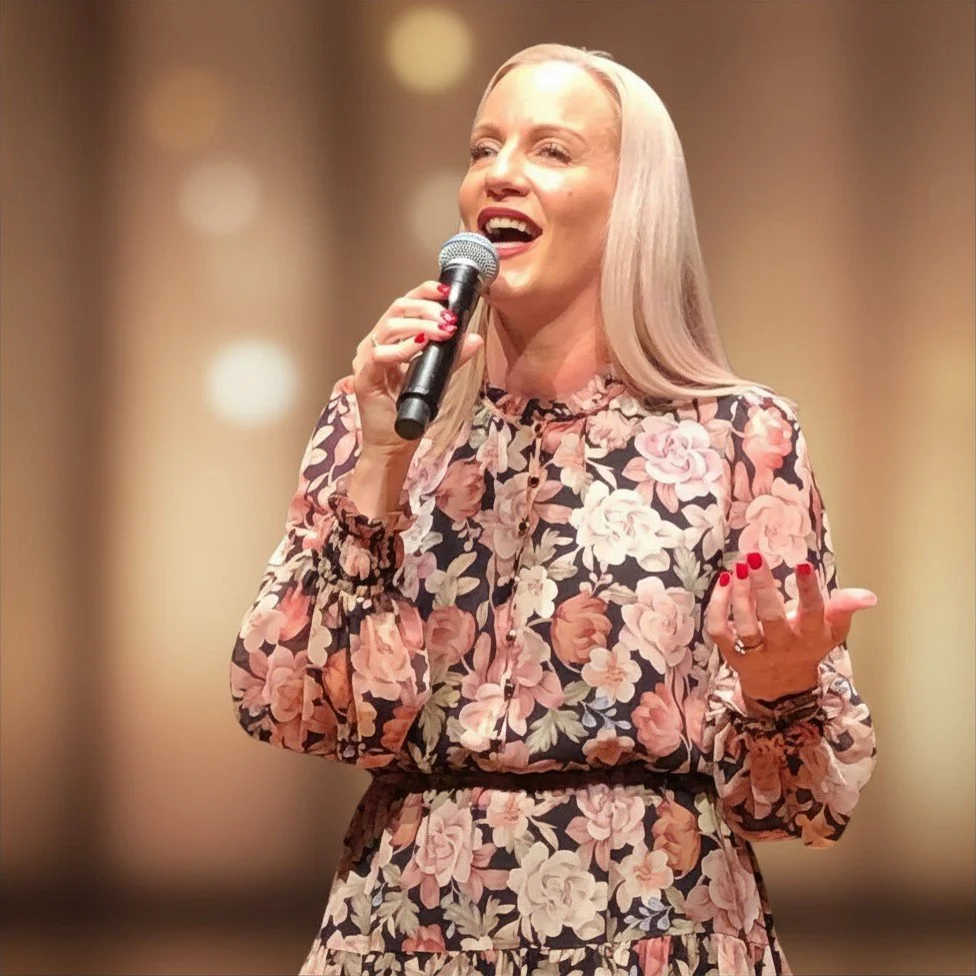
What brought me back was teaching. Since 2000, I have run a private studio in voice and piano — a space that quietly became home for students carrying the kind of fear I once had. They found me, and I found them, and together we worked out what it took to feel safe enough to be heard.
Outside the studio, I returned to performance on my own terms — directing the Forest Lake Community Choir, singing lead in rock and pop cover bands, slowly learning to enjoy the stage I had once feared.
Over time, I came to understand that the conventional one-to-one teaching model — student as recipient, teacher as authority — wasn't always what these students needed. Something was missing. Something to do with each other.
That question carried me into doctoral research at the Queensland Conservatorium of Music, Griffith University, where my thesis examines how social relationships shape music performance anxiety in pre-adolescent voice students. The work has been published in Australian Voice and presented at the ISME World Conference in Helsinki, the ANATS National Conference, and Griffith's Methodology Matters symposium. What it shows, in essence, is this: confidence is rarely built alone. It is built in community — in rooms where vulnerability is met with care, where peers learn to hold space for one another, and where being anxious is not the same thing as being broken.
And I Sang! is the natural extension of that work.
I founded And I Sang! to support anyone whose relationship with performance — on a stage, in a meeting, before an audience of any kind — has been shaped by anxiety. That includes singers and musicians, but it also includes public speakers, students, athletes, professionals, and the teachers, parents, coaches, and institutions who walk alongside them. The work is grounded in research and shaped by lived experience. It is sophisticated, evidence-informed, and unwaveringly human.
Because confidence is never a solo act
Rebecca Yarnold Founder and Performance Confidence Specialist · And I Sang! Doctoral candidate, Queensland Conservatorium of Music, Griffith University
Qualifications — PhD (Music Education), Griffith University, in progress · Master of Music Studies (Voice Pedagogy), Griffith University, 2021 · Graduate Certificate in Psychology, James Cook University, 2022
Teaching and performance — Private voice and piano studio since 2000 · Director, Forest Lake Community Choir, 2015–2017 · Lead vocalist, rock and pop cover bands
Memberships — Australian Voice Association · Australian Society for Music Education · Australian National Association of Teachers of Singing · Queensland Music Teachers Association · Creative Arts Research Institute